
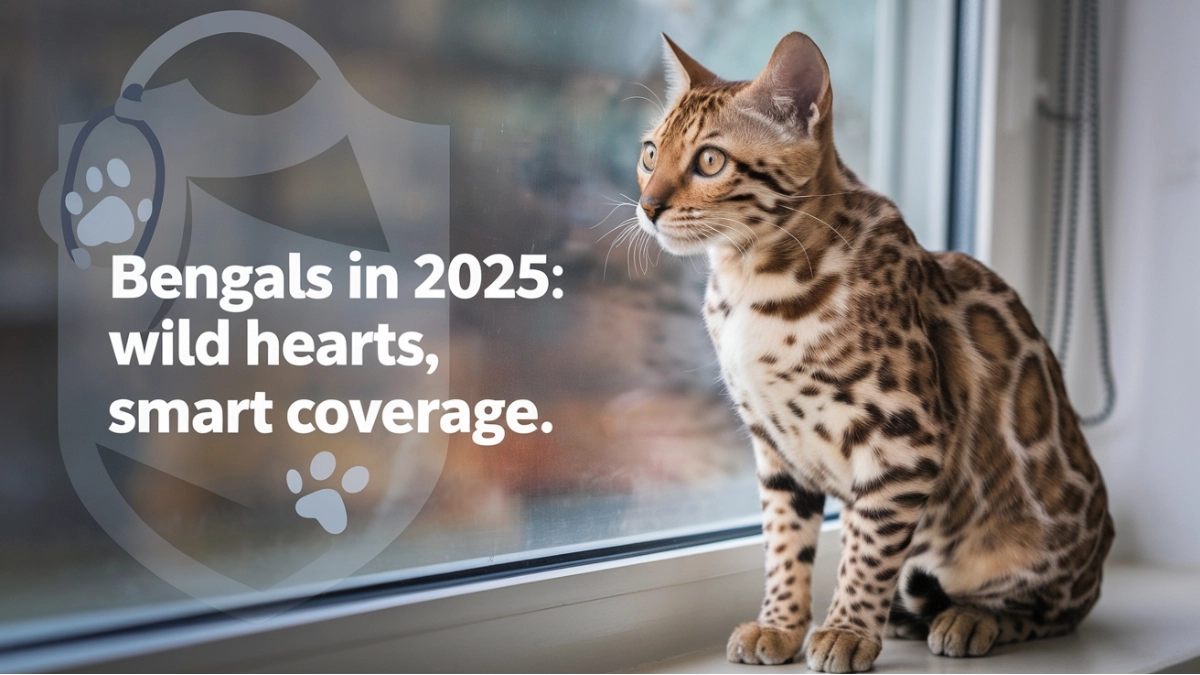
Imagine this: You come home after a long day, and your Bengal cat, with its striking leopard-like spots and playful demeanor, greets you at the door. These feline companions are not just pets; they’re family. But as any Bengal owner knows, their adventurous spirit can sometimes lead to unexpected vet visits. That’s where understanding their unique needs and considering pet insurance comes into play.
The Allure of the Bengal Cat
Bengal cats are a blend of wild aesthetics and domestic charm. Originating from a cross between the Asian leopard cat and domestic breeds, they’ve captured the hearts of many with their:

- Distinct Appearance: Their coat patterns resemble that of wild leopards, making them stand out in any room.
- Energetic Personality: Bengals are known for their high energy levels, curiosity, and intelligence.
- Affectionate Nature: Despite their wild looks, they form strong bonds with their human companions.
Why Pet Insurance Matters for Bengal Owners in 2025
Veterinary care costs have been on the rise. In 2025, the average annual cost of pet insurance is $607.71 for dogs and $299.32 for cats, including Bengals.

Rising Veterinary Costs
Advancements in veterinary medicine mean better care but also higher bills. Treatments for conditions like hypertrophic cardiomyopathy (HCM), a heart disease Bengals are prone to, can be costly. Diagnosing HCM can cost up to $1,500, with ongoing treatments reaching $300 per month.
Financial Peace of Mind
Pet insurance offers a safety net, ensuring that unexpected medical expenses don’t become financial burdens. It allows owners to focus on their Bengal’s health without the added stress of hefty bills.
Understanding Bengal-Specific Health Concerns
While Bengals are generally healthy, they’re predisposed to certain conditions:
- Hypertrophic Cardiomyopathy (HCM): A common heart disease in cats.
- Progressive Retinal Atrophy (PRA): Leads to vision loss over time.
- Flat-Chested Kitten Syndrome: A developmental deformity affecting the chest.
Being aware of these conditions helps in early detection and management.
Best Pet Insurance Plans for Bengal Cats in 2025
Choosing the right insurance requires understanding the specific needs of Bengals and what each provider offers.
Top Providers
- Pets Best: Recognized for comprehensive coverage and competitive pricing.
- Figo: Offers extensive coverage options tailored for active breeds like Bengals.
- Pumpkin: Known for its broad coverage, including preventive care.
Factors to Consider
- Coverage Details: Ensure hereditary and congenital conditions are covered.
- Reimbursement Rates: Higher reimbursement means lower out-of-pocket costs.
- Deductibles: Balance between monthly premiums and deductible amounts.
Real-Life Stories: How Insurance Made a Difference
Consider Jane, a Bengal owner from Texas. Her cat, Leo, was diagnosed with HCM. The treatment costs were overwhelming, but her pet insurance covered 90% of the expenses, allowing Leo to receive the best care without financial strain.

Tips for Bengal Owners in 2025
- Regular Vet Check-ups: Early detection of health issues can save costs and improve quality of life.
- Proper Nutrition: A balanced diet supports overall health and can prevent certain conditions.
- Mental and Physical Stimulation: Bengals are active cats; engaging them in play can reduce the risk of behavioral issues.
Deep Dive: Best Pet Insurance Plans for 2025
Top 3 Providers for Bengals (And Their Quirks)
- Pets Best:
- Pros: Covers hereditary conditions (key for Bengals!), 24/7 vet telehealth.
- Cons: Slightly pricier for accident-only plans.
- 2025 Perk: New “Adventure Package” for escape-artist cats.
- Figo:
- Pros: Unlimited payouts, app tracks vet records.
- Cons: Longer wait periods for hip dysplasia.
- 2025 Perk: Discounts for multi-pet households (ideal if your Bengal has a dog sidekick).
- Pumpkin:
- Pros: 90% reimbursement, includes dental care.
- Cons: No accident-only option.
- 2025 Perk: Free access to cat behaviorists (because Bengals need therapists too).
Niche Plans Worth a Look
- Senior Bengals: Embrace’s aging pet coverage reduces premiums for cats over 10.
- Exotic Hybrids: Spot’s “Wild-at-Heart” plan covers Bengal-specific genetic issues.
Real Costs of Pet Care in 2025: Prepare for Sticker Shock
When Curiosity Hurts: Common Bengal Expenses
- Heart Disease (HCM): 3,000–3,000–7,000 for diagnosis + meds.
- Broken Bones: 2,500–2,500–6,000 (see: failed parkour attempts).
- Dental Extractions: $1,800 (Bengals chew everything).
Personal Stories: How Insurance Saved the Day
Case Study #1: “Insurance Covered My Bengal’s $8,000 Cancer Treatment”
Sarah, Texas: “When Miko was diagnosed with lymphoma, I cried—then remembered her Pumpkin plan. I paid $1,000; they covered the rest. Now she’s in remission and plotting more chaos.”
Case Study #2: “Without Figo, I’d Be in Debt”
Jake, Colorado: “My Bengal, Zara, ate a LEGO. Yes, a LEGO. Figo reimbursed 90% of the $4,000 surgery. Worth every penny.”
How to Choose the Right Plan: 5 No-BS Tips
- Skip the Fine Print at Your Peril: Check waiting periods (e.g., 14 days for accidents vs. 6 months for hip dysplasia).
- Wellness Add-Ons = Secret Weapon: Vaccines and check-ups add up; bundle them.
- Breed Matters: Ensure hereditary conditions are covered (Bengals = heart issues).
- Compare, Compare, Compare: Use PetInsurance.services’ comparison tool to cheat-sheet your options.
- Lock in Rates NOW: Premiums rise as pets age—enroll your Bengal while they’re young(ish).
Like to read about Dog Health Insurance
Why Pet Insurance Matters in 2025
The Rising Tide of Vet Costs
If you’ve taken your Bengal to the vet lately, you’ve probably noticed the bill feels more like a mortgage payment. In 2025, veterinary costs are up a whopping 7.3% from last year, according to the latest stats trickling in. That’s not just inflation—it’s the price of cutting-edge care, from high-tech diagnostics to life-saving surgeries. For a breed like the Bengal, known for its active (read: accident-prone) nature, those costs can hit hard and fast.
The North American Pet Health Insurance Association (NAPHIA) reports nearly 6 million pets insured in the U.S. as of 2023, and that number’s climbing in 2025 as more owners wake up to the reality of vet bills. With pet ownership at an all-time high—over 65 million U.S. households have a dog or cat—demand for care is skyrocketing, and so are the prices.
2025 Trends: What’s New?
Pet insurance in 2025 isn’t standing still. Premiums are up about 17% from last year, reflecting both rising vet costs and a hotter-than-ever market projected to hit $10 billion by 2030. New providers are popping up, offering flashy perks like 24/7 telehealth lines and direct vet payments. Meanwhile, existing companies are tweaking plans—some for better coverage, others for higher profits. It’s a jungle out there, but I’ll help you cut through the vines.
Vet Costs With vs. Without Insurance: A Quick Look
Here’s a table to put things in perspective, based on 2025 averages for a Bengal cat:
| Condition | Cost Without Insurance | Cost With Insurance (80% Reimbursement, $250 Deductible) |
|---|---|---|
| Broken Leg | $2,500 | $650 |
| Cancer Treatment | $8,000 | $1,850 |
| Dental Cleaning | $400 | $250 (if wellness plan added) |
| Swallowed Object | $3,500 | $850 |
Source: Estimated 2025 data from vet associations and insurance trends.
Without insurance, you’re on the hook for every penny. With it, you’re cushioned—especially for emergencies. For Bengals, whose curiosity often lands them in trouble, that’s a game-changer.
Conclusion: Don’t Wait Until It’s Too Late
Look, I get it—pet insurance isn’t sexy. But neither is a GoFundMe for your cat’s surgery. In 2025, rates are climbing, Bengals are still chaos incarnate, and vet bills won’t magically shrink.
Lock in a plan today. Your future self (and your Bengal) will thank you.
P.S. Still unsure? Check out our Pet Insurance 101 guide or compare top 2025 plans here.
FAQ
Nope, 99% of plans exclude them. If Luna had kidney issues before I signed up, I’d be out of luck. Some, like AKC, cover curable conditions after a 12-month wait—rare, but worth checking.
Only with a wellness add-on. Base plans cover accidents and illnesses, not vaccines or checkups. Add $10-$20/month for that perk.
Pets Best for affordability, Pumpkin for comprehensive coverage. Your Bengal’s age and health steer the choice—dive into Compare Top Plans.
Pay the vet, file a claim (app, website, or mail), get reimbursed. Some plans (Pets Best, Trupanion) pay vets directly—ask yours.
Yep, up 17% on average. Lock in a plan now before 2026 hikes hit harder—trust me, you’ll thank yourself later.


